
About BC99
Strain Safety of Weizmannia(Bacillus) Coagulans BC99
April 01 2026
Share


[1] Weizmannia coagulans
· A strain included in China’s List of Strains for Food Use since 2016.
· Recognized for inclusion on the European Food Safety Authority (EFSA) Qualified Presumption of Safety (QPS) list.
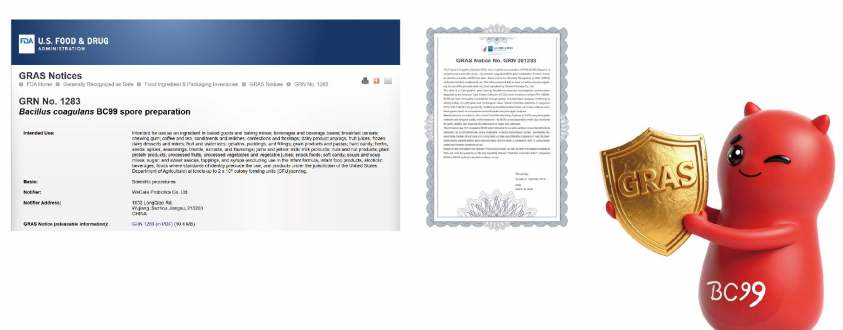
· Recognized as a probiotic with Generally Recognized as Safe (GRAS) status, affirmed by the U.S. Food and Drug Administration (FDA).
Year | Event | Issuing Authority |
2010 | Issuance of the List of Strains that Can Be Used in Food | Former Ministry of Health |
2016 |
Update to the List of Strains for Food Use:Inclusion of Bacillus coagulans |
National Health Commission |
2022 |
Further Standardization of the List of Strains for Food Use:Reclassification and Renaming of Strains,Including the Renaming of Bacillus coagulans to Weizmannia coagulans |
National Health Commission |
In 2023,BC99 achieved self-GRAS(Generally Recognized as Safe)status.
In 2026,it received FDA GRAS certification under GRAS Notice No.GRN 1283.
[1] Multi-Dimensional Safety Analysis
Weizmannia coagulans BC99 has undergone comprehensive and rigorous safety assessments, with multi-level safety evaluations performed across genomic, in vitro, animal, and clinical dimensions.
Genomic Level
Weizmannia coagulansNo potential virulence-associated genes or biogenic amine synthesis-related genes were detected in BC99. This strain is classified as non-pathogenic to humans, which fully validates the genomic safety of BC99.
In Vitro Level
The antibiotic susceptibility of BC99 was screened via the minimum inhibitory concentration (MIC) method, and the obtained MIC values were compared with the EFSA-established cutoff thresholds. The results confirmed that BC99 is susceptible to multiple antibiotics, including vancomycin, kanamycin, and tetracycline. Additionally, BC99 displays no hemolytic activity and does not generate harmful metabolites detrimental to host health, such as D-lactic acid and biogenic amines. These in vitro findings furnish critical safety evidence for the practical application of BC99.
Animal Level
BC99 presents no pathogenicity [5] and shows no oral acute or subchronic toxicity in test animals [6].
Clinical Level
Weizmannia coagulansAs of February 2026, more than 1,000 subjects across all age groups—including children, adults, and the elderly—have been enrolled in clinical trials involving BC99. Among the clinical intervention regimens, the maximum daily dosage administered was 48 billion CFU, with the longest intervention duration lasting up to 12 weeks.
No serious adverse events (SAEs) associated with BC99 were reported in any dosage group or age subgroup throughout the entire clinical trial period. No abnormal alterations were observed in laboratory test parameters (covering complete blood count, hepatic and renal function tests, etc.), vital signs, or routine physical examinations.
Weizmannia coagulansCollectively, these robust findings verify that BC99 possesses an excellent safety and tolerability profile in humans.
Based on comprehensive gene analysis, in vitro evaluations, animal studies, and robust clinical trial data, Weizmannia coagulans BC99 demonstrates robust safety profiles. These compelling safety attributes strongly support its versatile application in probiotic products for adults, children, and the elderly population.


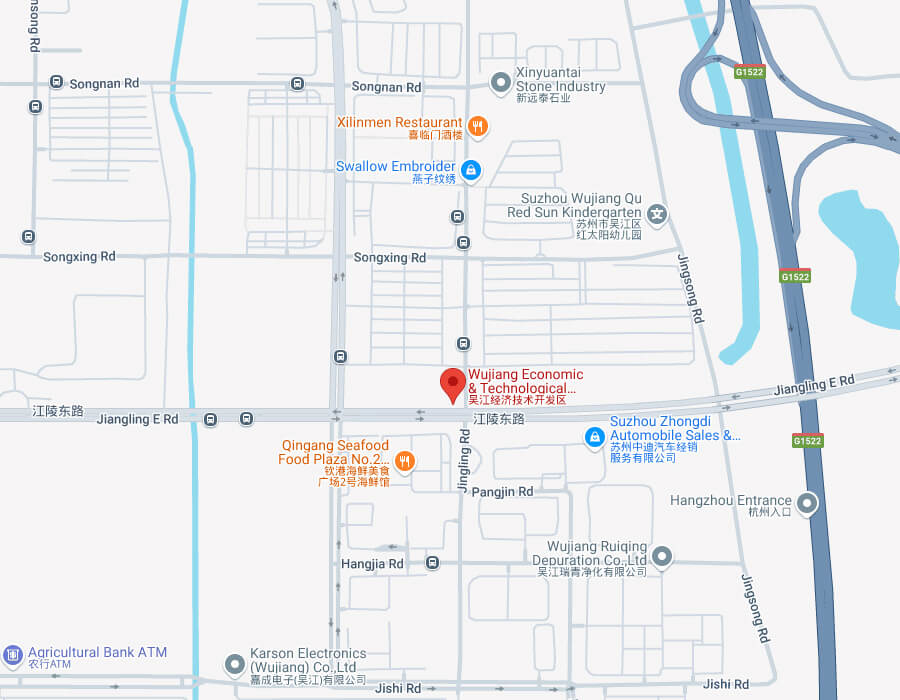

No.999,Guangming Rd., Wujiang Economic and Technological Development Zone, Suzhou City, Jiangsu Province, China
 Leave a Message
 Email
Email Linkedin